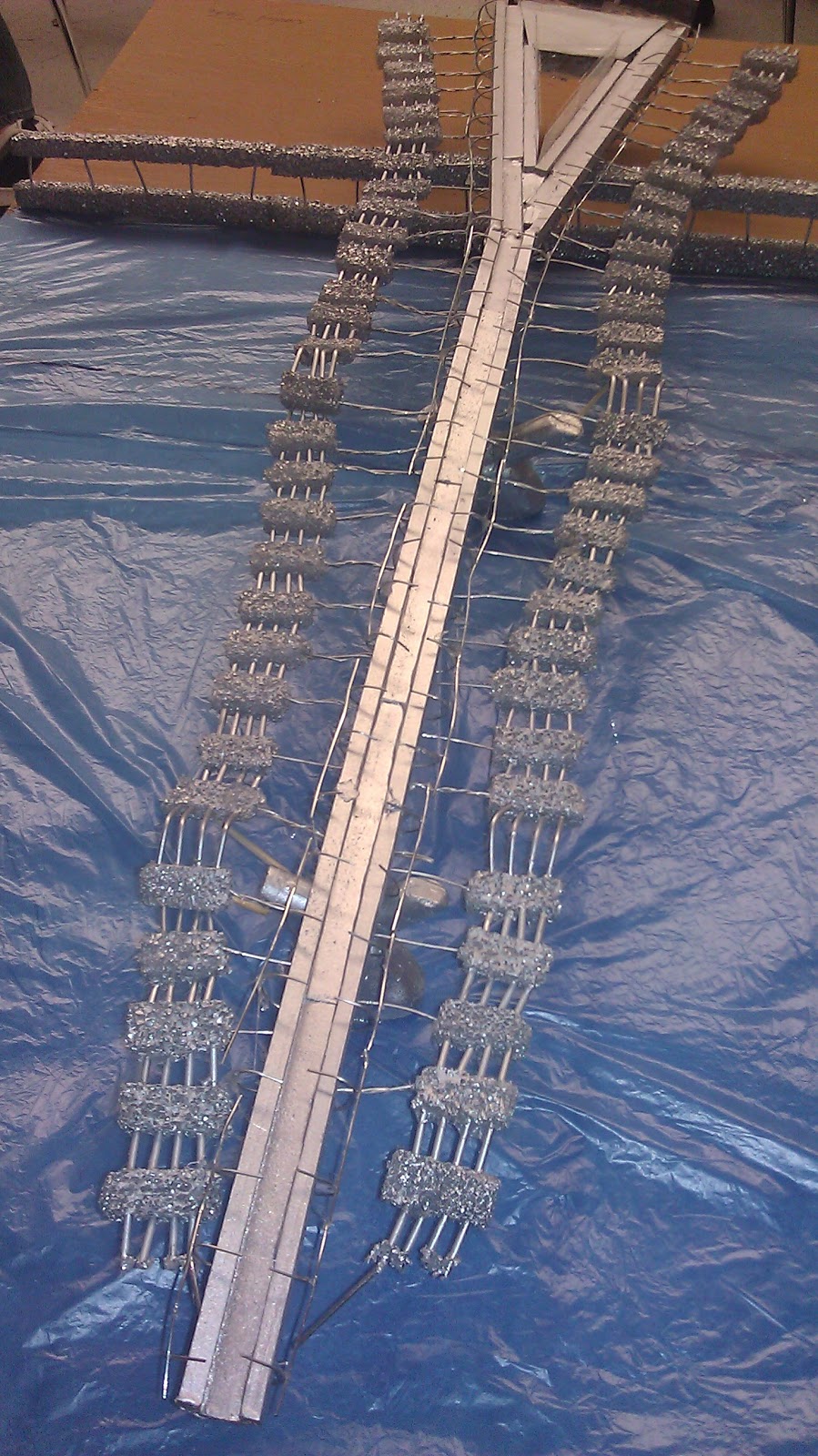
Wednesday, May 18, 2011

Geometry Project: Using Proportion in Construction

This project that I assigned to my Geometry students this year involves re-creating something (a building, toy, et cetera) using proportion.

The main project components are the following:
     (1) research and mathematical presentation/calculations
     (2) essay about the chosen object (typewritten, at least two pages,
           double space, font size of 12)
     (3) finished product
     (4) oral presentation and interview

Below are my students' wonderful products. 


Tata's House by Jesus Martinez (10)

Tata's House by Jesus Martinez (10)


The Taj Mahal by Diana Yakushkina (9)


F-22 Raptor by Joseph Zamora (10)


The Freedom Tower by Samantha Cerda (10)


The Rocha Home by Karidme Rocha (10)

The Rocha Home by Karidme Rocha (10)


Rion Antirrio Bridge by Jorge Roque (10)


The Crystal Palace by Liann Pena (10)


Las Vegas Welcome Sign by Irma Mata (9)


Red Barn by Ruby Cruz (10)


Violin by Ayssa Salinas (9)


The London Eye by Lesly Diaz (10)


The Taipei 101 by Cecilia Rocha (9)


Playhouse by Zulma Reyes (10)


The Bansi Tower by Martha Lopez (10)


Mack 1972 Semi by Rey de Leon (10)


.
Washington's House by Andrea Garcia (10)


Taekwondo Trophy by Mark Cruz (10)


Temple of Zeus by Victoria Gomez (10)


Temple of Zeus by Victoria Gomez (10)


The Space Needle by Adriana Garcia (10)


The Burj al Arab by Vincent Grimaldo (10)


The Singapore Flyer by Amber Hernandez (9)


The Mustang Shelby GT 500 by Yesenia Cervantes (10)


The Pacheco Home by Berenice Pacheco (10)


The Sorcerer's Hat by Sarah Black (10)


Soccer Field by Alfonso Luna (9)


The Empire State Building by Sebastian Garcia (10)


The Schroeder House by Arnoldo Torres (10)


C-130 Hercules Plane by Juan Jimenez (10)


Tabernacle of Moses by Dianajudith Salinas (10)


Play house by Jessica Hernandez (10)
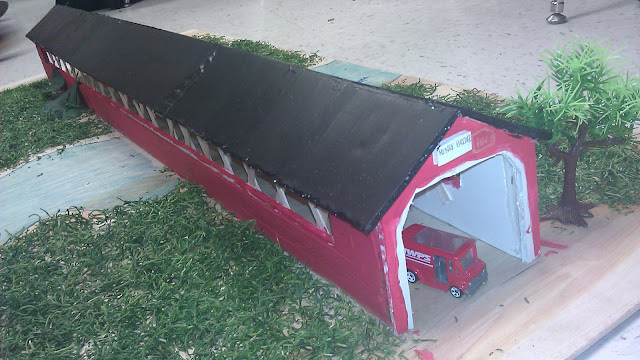

by Alejandro Tenopala (9)


London's Millennium Bridge by Kimberly Tellez (10)


The Basketball Court by Michelle Mendoza (9)


The Garcia Home by Evelyn Garcia (10)


Fighter Plane by Juan Garcia (10)


by Samantha Vasquez (10)


The Alamo by Samantha Rodriguez (10)


The Burj Dubai by Edgar Rodriguez (10)


.Play House by Heycy Rodriguez (10)

Table Lamp by Leslie Cortinas (10)


A Barn by Ashley Baker (10)


The San Francisco Bridge by Irving Urbina (10)


The Carrasco Home by Ashley Carrasco (9)


The Cardoza Home by Courtney Cardoza (10)


A Play House by Wendy Martinez (10)


A Phone Booth by Kate Salgado (10)


The Kukulkan Pyramid by Victor Castillo (10)


The Bellagio Hotel and Casino by Alexis Siller (10)
Photo courtesy of Alexis Siller


The Welcome to Las Vegas Sign by Irma Mata (9)


.

Monday, May 16, 2011

Three Games Problem

During lunchtime today at school, Criss, a junior, shared a problem that was posed to him by an adult friend over the weekend. This friend considered the problem  difficult that he didn't think anybody could solve. He allegedly said to Criss that he would give him a car as a prize if he was able to solve it. Unfortunately, the young man failed to solve it. Now he is anxious to know how.

"I know how to do it. It's easy."  I said.

"Really? His face brightened up.  He may have just found someone who could possibly solve his friend's intriguing problem!

Here's my modified version of the problem: Criss pays a dollar to start playing Game 1.  He spends half of his money on this game and pays a dollar to log out. He then proceeds to pay a dollar to start playing Game 2. As in Game 1, he spends half of his money on this game and pays a dollar to log out. He decides to pay a dollar for Game 3, too. As in each of the previous two games, he spends half of his money on this game. When he pays a dollar to log out, he finds out that he has no money left. How much money did he have before he played the first game?


Criss couldn't wait for my algebraic solution. Could you?

Why don't you try it yourself first? Once you're done, scroll down to compare your answer with mine.

>

>

>

>

>

>

>

>

>

>

>

>

Solution:
Let x be the amount of money Criss had before he started playing the first game. Then:

(x - 1) equals money left after paying a dollar to start Game 1.

(x - 1) - 1/2(x - 1)  equals money left after spending half his money on Game 1.

(x - 1) - 1/2(x - 1) - 1 -1 equals money left after paying a dollar to log out and another dollar to start Game 2.

(x - 1) - 1/2(x - 1) - 1 -1 - 1/2[(x - 1) - 1/2(x - 1)  - 1 - 1] equals money left after spending half his money on Game 2.

(x - 1) - 1/2(x - 1) - 1 -1 - 1/2[(x - 1) - 1/2(x - 1) - 1 - 1] - 1 - 1  equals money left after paying a dollar to log out and another dollar to start Game 3.

(x - 1) - 1/2(x - 1) - 1 -1 - 1/2[(x - 1) - 1/2(x - 1) - 1 - 1] - 1 - 1 - 1/2{(x - 1) - 1/2(x - 1) - 1 - 1  - 1/2[(x - 1) - 1/2(x - 1) - 1 - 1]  - 1 - 1} equals money left after spending half his money on Game 3.

(x - 1) - 1/2(x - 1) - 1 -1 - 1/2[(x - 1) - 1/2(x - 1) - 1 - 1] - 1 - 1 - 1/2{(x - 1) - 1/2(x - 1) - 1 - 1  - 1/2[(x - 1) - 1/2(x - 1) - 1 - 1]  - 1 - 1} - 1 = 0, no more money left.

The equation above may be simplified as 0.125x - 2.625 = 0, which gives us x = 21.

Criss, therefore, had $21.00 before he started playing Game 1.

Check for reasonableness. Do you agree with my solution?

Are there other ways to solve this problem? Criss would be happy to know. :D